Summary
I found a persistence DOM based XSS vulnerability in feedly.com website. As it was not possible to exploit it directly without altering the cookies, I called it an unexploitable vulnerability! However, I could exploit it by using another XSS vulnerability which was in s3 subdomain of feedly.com website. This post explains what I have done to exploit this issue.
DOM based XSS in feedly.com:
First I found a DOM based XSS in feedly.com. As you can see in below picture the source is a cookie (feedlyVersion) and the sink is document.write().
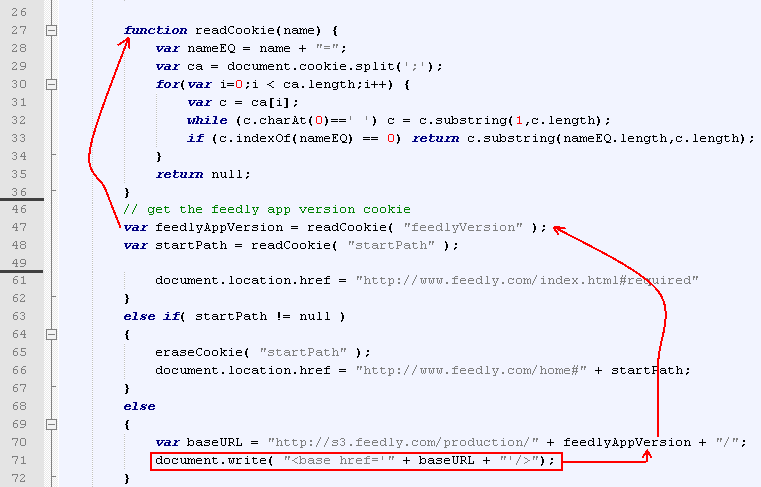 |
| Figure 1 - Picture of vulnerable code |
Normally we can’t exploit this issue because it’s not possible to control the value of ‘feedlyVersion’ cookie and this is a less severe issue.
But in this type of vulnerability if attacker can control a cookie in a victim’s browser, then it can be assumed that exploitation is similar to other vectors where an attacker controls aspects of a user request, like a querystring value, or an HTTP POST name-value pair [1]. So the only way to exploit this DOM based XSS was adding a new cookie with the same name as ‘feedlyVersion’ and our payload.
Flash based XSS in s3.feedly.com:
Then I tried to find another XSS vulnerability in feedly.com sub-domains. Quickly I found a vulnerable version of JWplayer [2] http://s3.feedly.com/production/@@@/flash/player.swf in s3.feedly.com.
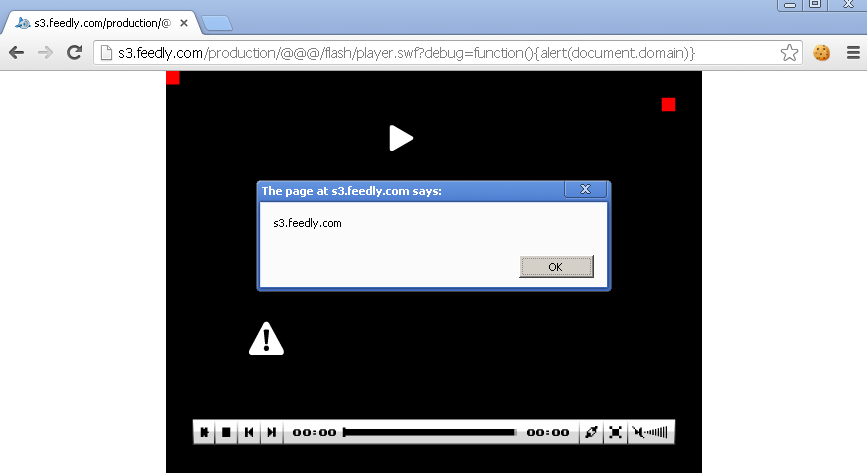 |
| Figure 2 - Flash based XSS in s3.feedly.com |
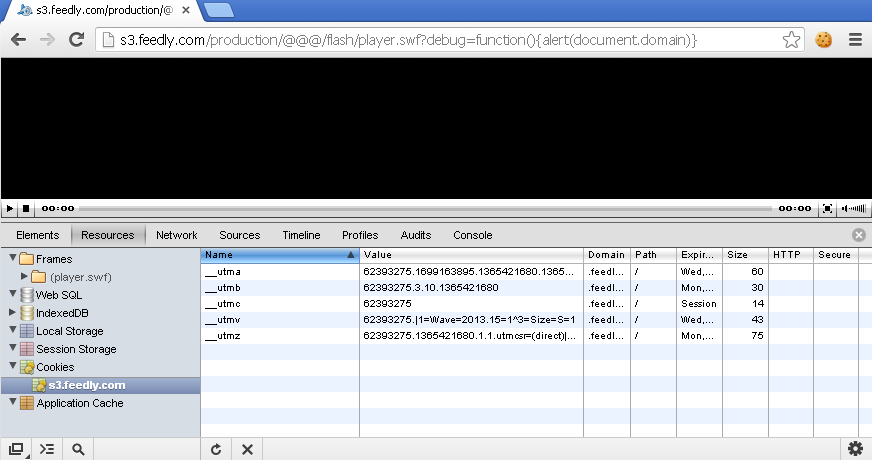 |
| Figure 3 - s3.feedly.com befor adding new cookie |
Through this vulnerability in s3.feedly.com subdomain It was possible to add a new cookie for *.feedly.com.
Chaining these issues:
To successfully exploit this issue our new feedlyVersion cookie should be in front of original feedlyVersion in cookie string. I used the trick which Egor Homakov introduced in his “Hacking Github with Webkit” blogpost [3].
A) Set a new cookie with feedlyVersion name and our payload for *.feedly.com:
| |
B) Moving our new feedlyVersion in front of the old one in cookie string:
| |
C) Redirecting user to http://feedly.com to execute our payload:
| |
Finally putting all of them together:
| |
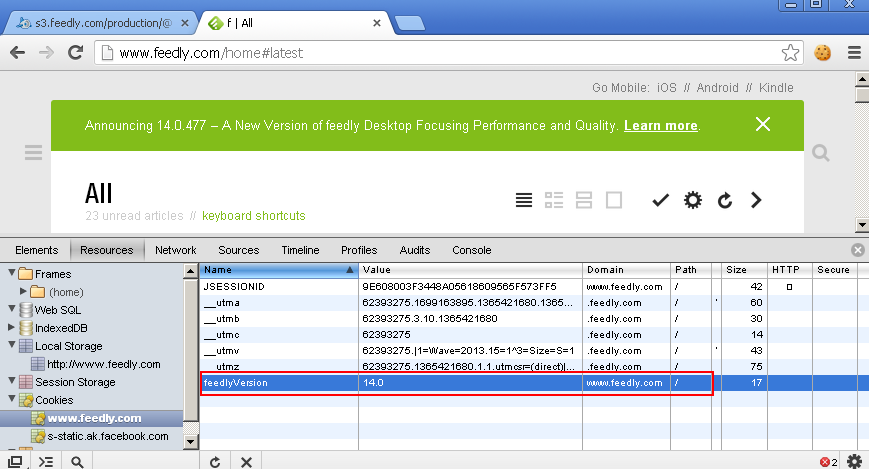 |
| Figure 4 - feedly.com before adding new feedlyVersion cookie |
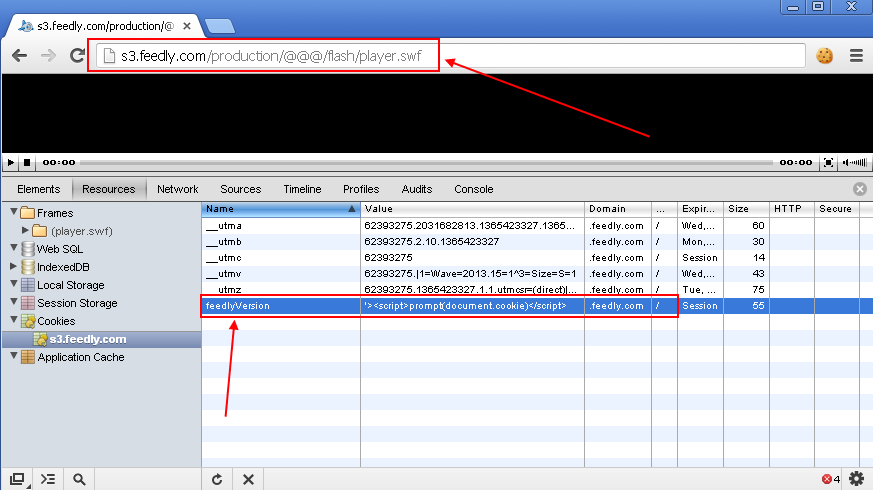 |
| Figure 5 - s3.feedly.com after adding feedlyVersion cookie (by attacker) |
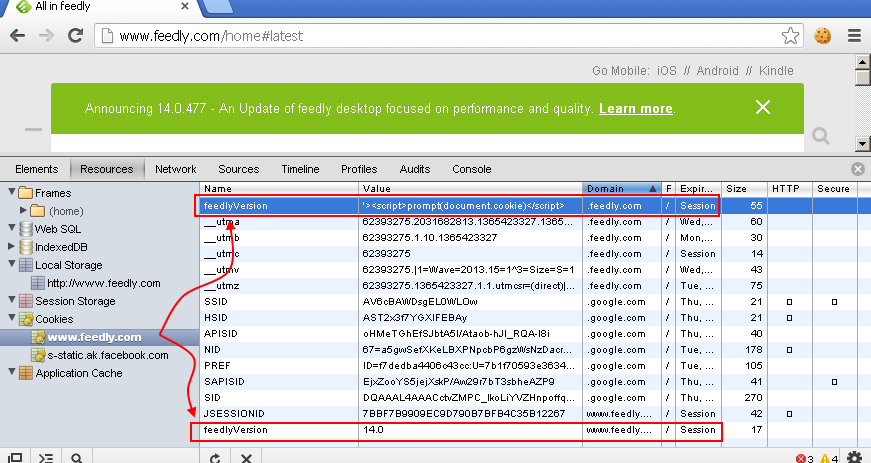 |
| Figure 6 - feedly.com after adding new feedlyVersion cookie |
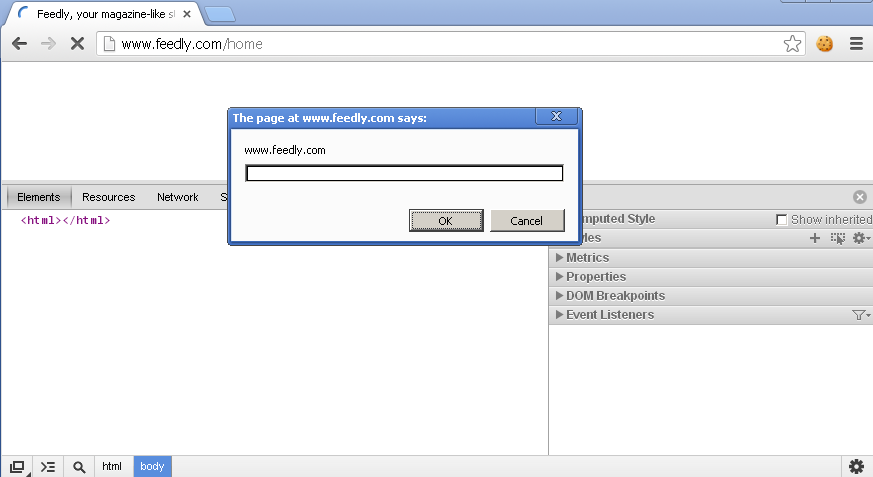 |
| Figure 7 - Attacker controlled cookie delivered to the sink |
PoC Video:
Disclosure Timeline:
April 8, 2013: Details of the vulnerabilities sent to Feedly.
April 8, 2013: Received reply, “Will take a look at them today”.
April 9, 2013: Received reply, “All issue have been fixed”.
Kudos to the Feedly team for fixing issues very quickly
References: